



Written by Gabriella Pearson
I didn’t always dream of becoming an interior designer. Like many of my peers, it all started with a love for art and craft, the kind that shows up in childhood through oversized art kits at every birthday or holiday and a never-ending stream of project ideas from family members. I was the kid who’d disappear into my room for days, hyper-focused on my next creative masterpiece.
My parents were always supportive, but they also loved to remind me that “Artists don’t make any money.” Slightly crushed but still determined to make a life out of creativity, I started looking toward design — something that felt a little more structured but still expressive.
When COVID hit during my sophomore year of high school, everything shifted. Being pulled away from classmates and daily routines made me realize how much I valued connection and community. That stuck with me. So when it came time to choose a college, I wasn’t just focused on academics. I wanted to be somewhere that felt close to home yet gave me space to grow. That’s what led me to Washington State University. Since it’s not too far from my hometown of Olympia and has a strong design program, it felt like the right step forward. Go Cougs!

Freshman year was a whirlwind. With new faces, new routines, and those infamous intro studio classes where no one really knows what’s going on, the year was just a lot of caffeine and chaos. I originally had my sights set on architecture, but after missing the cut, I shifted my attention to the interior design program. I’ll admit I thought it was just about “making things look pretty.” I couldn’t have been more wrong.
Fast forward to today: I’m the president of WSU’s Interior Design Student Association, a student ambassador, and someone deeply involved in the program that helped me find my footing. I still remember my first day in the program. Our professor opened class with a warm smile and a cheerful, “Good morning, designers!” I sat there during her lecture, grinning and nodding along, and I knew in that moment that I was exactly where I was supposed to be.
This past year, the internship search became the topic of conversation at college, and I felt equal parts excitement and anxiety. I kept hearing about BCRA from classmates and faculty who knew I was passionate about both interior design and architecture, especially where those two worlds meet.
After doing some research, I found that BCRA genuinely values interior designers alongside architects. They care about community, their projects are diverse, and they’re only about 30 minutes from home. I knew I had to check them out.
I reached out to someone I’d connected with in the industry and asked if she could introduce me to someone at BCRA. To my surprise and excitement, the connection came through. I was invited to an interview, and soon after, I was offered the summer internship. I was thrilled.
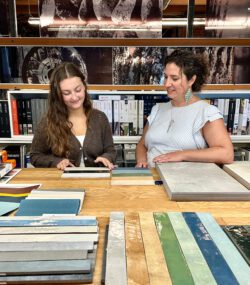
From the start, I was eager to dive in and learn what interior designers and architects actually do day-to-day. I was basically a dry sponge, ready to soak up every bit of insight I could. I wanted to see the full picture — the behind-the-scenes work, the real process, and all the things that don’t make it into studio critiques. I was ready to take what I’d learned in school and finally see how it all translates into real life.
Every firm has its own rhythm, and at BCRA, I quickly started to understand how project flow can shift based on scope, scale, and client needs. The process from schematic design to construction administration isn’t one-size-fits-all, and the rules don’t always apply the same way.
In school, we focus a lot on concept and aesthetics and how they merge with functionality. But once we present our final renderings and floor plans, we’re done for the semester. That’s where the mystery begins. What actually happens next?
One of the biggest takeaways for me was realizing that the role of the interior designer doesn’t end once the design concept is wrapped up in a neat package. In fact, design is never really finished.
Something is always evolving. Even after the creative vision is defined, interior designers are still actively involved — reviewing submittals, managing construction coordination, and making sure what’s built aligns with the original intent. Without that follow-through, the design can get lost in translation.
I have often heard professors say, “design is design is design,” a phrase that used to feel abstract but now makes more sense. Design is not just what you pin on the wall or how your rendering looks but in the decisions that come before the mood board and long after the final presentation. It is the coordination, the problem-solving, the way you respond to real-world constraints. At BCRA, I saw that firsthand. I realized that, as designers, we are always designing, whether through a material palette, a consistently space-planned floor plan, or a well-done detail that clearly communicates the design intent and how it will be constructed.

This idea came into full view while working on a tenant improvement project. One of the biggest lessons I learned was that design works within a budget. This can feel intimidating, but this project helped me see constraints as creative challenges. I learned how to make thoughtful choices that maintained the integrity of the design while staying within real-world limits. It made me think differently — more strategically and purposefully.
That project, along with others I supported, taught me how to manage time across multiple deadlines. I learned to communicate clearly with teammates, estimate how long tasks might take, and adjust to the pace of professional life. I started to see how much of design relies on responsiveness, flexibility, and staying coordinated with both the team and the client. These experiences gave me more confidence in my process and sparked a deeper curiosity about the full life cycle of a project, especially at a larger scale.
As I spent more time at BCRA, I found myself asking more questions, sitting in on meetings, and learning about the firm’s design philosophies. One area that really stood out was their work in behavioral health design. Their thoughtful approach blends empathy with hospitality, creating environments that are functional and truly supportive to healing. My eyes were opened to a kind of design that goes beyond aesthetics to genuinely caring for people. That is the kind of design I aspire to create.
Being part of BCRA, a firm that prioritizes people in every decision, reminded me that design is more than just solving problems. Good design has the power to improve lives.
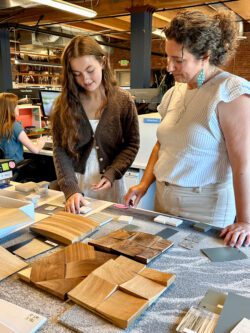
If I had one piece of advice for other design students looking for an internship, it would be this: Be anxiously confident. That phrase was passed down to me by someone in the industry, and it stuck. This field is constantly changing, and no two days will ever look the same. Feeling a little nervous is normal, so carry that nervousness with intention.
When you land that internship, ask questions. Speak up. Take initiative even when you aren’t sure you should. Stay curious, flexible, and open to growth. This is your time to learn. Absorb everything you can. Get involved, say yes to opportunities, and build connections. Every conversation, every task, every small moment can teach you something, and those little moments can add up to something big.
If I had to sum up what this internship has taught me, it’s this: Being a designer isn’t just about the work you produce; it’s about how you grow through it. It’s not about losing yourself in the work but finding new parts of yourself along the way — parts that are curious, capable, and ready for what’s next.
I am incredibly grateful for my time at BCRA and excited to carry these lessons with me as I continue growing into the kind of designer I hope to become.

Gabriella is a fourth-year student in Washington State University’s Interior Design program who recently interned at BCRA. She is passionate about empathetic design and dedicated to creating spaces that support mental health and overall wellness. Gabriella hopes to pursue a career in behavioral health design with a unique focus on integrating elements of hospitality to foster comfort and healing.

